
MindScope launhes from Copernicus Mind for human-centered behavioral intelligence research
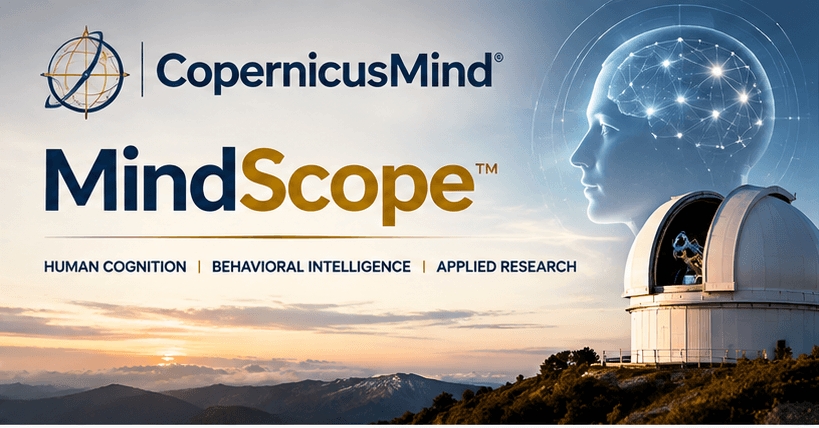
WOODBURY, UNITED STATES – November 10, 2026 – Copernicus Mind, an applied behavioral intelligence research practice, announced the development of MindScope, a human-centered research initiative intended to improve how organizations understand consumer thinking, decision-making, and behavior. The initiative will combine established research methods, behavioral data analysis, and artificial intelligence to develop a more comprehensive understanding of the factors influencing individual choices.
MindScope reflects the company’s emphasis on studying people within the actual circumstances in which decisions occur, rather than relying exclusively on broad demographic categories or assumptions about consumer preferences.
The initiative is intended to provide organizations with a structured approach to understanding the relationship between human cognition, measurable behavior, and the business decisions informed by that research.
Examining the reasons behind consumer decisions
Organizations have access to increasingly detailed information about consumer activity, yet understanding the motivations behind that activity remains a complex research challenge.
Purchasing behavior, digital interactions, and survey responses can reveal important patterns, but they do not always explain how attention, memory, motivation, and context contribute to individual decisions.
MindScope is being developed to examine those relationships through a combination of human inquiry and analytical research methods.
The initiative will emphasize the importance of studying consumer decisions from the perspective of the individual rather than beginning with assumptions established by the organization conducting the research.
“Technology has significantly expanded our ability to observe and analyze behavior, but data alone does not explain human decision-making,” said Lane Meyer, SVP Technology at Copernicus Mind. “MindScope is designed to bring cognitive research and analytical technology together while keeping the individual at the center of the process.”
Combining human research with artificial intelligence
A central component of the MindScope initiative is the disciplined application of artificial intelligence to behavioral research.
Artificial intelligence can assist researchers in identifying patterns across large datasets, comparing information from multiple sources, and examining relationships that may be difficult to identify through traditional analysis alone.
However, the initiative will also emphasize the importance of human interpretation and the careful evaluation of analytical findings.
Research conclusions can be influenced by incomplete information, sampling limitations, and assumptions embedded in analytical models.
MindScope will therefore focus on evaluating the evidence supporting a finding while identifying areas where additional research or human judgment is necessary.
“The objective is not to replace researchers with technology,” Meyer added. “It is to create a more useful relationship between human expertise and analytical tools. Artificial intelligence can help reveal patterns, but understanding what those patterns mean requires context, critical evaluation, and an appreciation for human complexity.”
Three areas of research emphasis
MindScope will organize its methodology around three connected areas: human cognition, behavioral data, and research synthesis.
Human cognition examines the role of attention, memory, motivation, and perception in shaping consumer choices.
Behavioral data analysis evaluates information collected through consumer interactions and other research methods, with an emphasis on distinguishing meaningful signals from misleading correlations.
Research synthesis brings these findings together into practical interpretations that can help organizations better understand their audiences and evaluate strategic decisions.
The framework is intended to support research across customer experiences, product communications, audience development, and other areas where understanding individual behavior can inform organizational planning.
Creating research that supports action
Copernicus Mind plans to develop MindScope as an adaptable research methodology rather than a replacement for existing research practices.
Its development will concentrate on connecting qualitative insights, quantitative analysis, and human interpretation into a coordinated process.
The initiative reflects a broader objective of making behavioral research more useful to the people responsible for translating findings into business decisions.
About Copernicus Mind
Copernicus Mind is an applied behavioral intelligence research practice focused on understanding how people think, decide, and act. Its work combines human cognition research, behavioral data analysis, and disciplined applications of artificial intelligence to help organizations interpret consumer behavior and make informed decisions. For additional information, visit CopernicusMind.
Media Contact
Lane Meyer
SVP Technology
Copernicus Mind
Email: [email protected]
Media Contact
Company Name: Copernicus Mind
Contact Person: Peter Klein
Email: Send Email
Phone: 15162080453
City: Woodbury
Country: United States
Website: https://copernicusmind.com


