
Dr. Tommy Rhee Introduces a New Paradigm for Health and Longevity in The End of Exercise and the Beginning of Activation
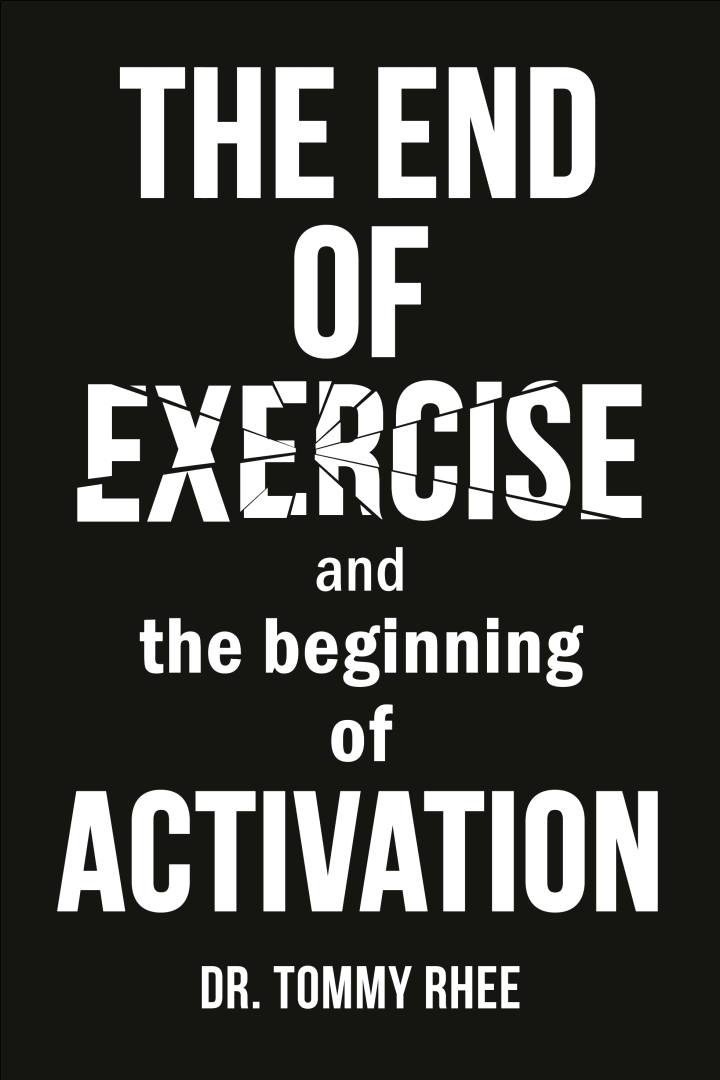
Dr. Tommy Rhee Introduces a New Paradigm for Health and Longevity in The End of Exercise and the Beginning of Activation
A growing body of research suggests that traditional exercise models may be contributing to chronic pain, injury, and long-term physical decline—particularly among adults over 40.
In his newly released book, The End of Exercise and the Beginning of Activation, Dr. Tommy Rhee presents a science-backed challenge to conventional fitness culture, proposing a shift away from punishment-based training toward a more biologically intelligent approach to movement and recovery.
For decades, exercise has been framed as a test of endurance and discipline, often equated with discomfort, fatigue, and physical strain. While this model has dominated gyms, sports programs, and public health messaging, rates of inflammation-related illness, joint degeneration, and exercise-induced injury continue to rise. According to Dr. Rhee, the problem is not a lack of effort—but the assumption that the body must be broken down to become stronger.
“Exercise, as it’s commonly practiced, delivers benefits at a physiological cost,” Rhee explains. “Joint wear, nervous system overload, hormonal disruption, and prolonged recovery are often accepted as normal. Over time, especially as we age, those costs accumulate.”
Dr. Rhee is a sports chiropractor with decades of clinical experience working with professional and collegiate athletes, aging adults, and patients with complex medical conditions. His background includes serving as Team Chiropractor for the UCLA Athletic Department and the Tampa Bay Buccaneers, as well as prior service as a Navy Aircrew veteran. Through years of clinical observation, he began questioning why even high-performing individuals were experiencing accelerated breakdown despite strict adherence to traditional exercise protocols.
In The End of Exercise and the Beginning of Activation, Rhee argues that the issue lies not in movement itself, but in how movement is delivered to the body. The book introduces the concept of biological activation—a method of stimulating strength, circulation, healing, and regeneration through precise mechanical and neurological signaling rather than excessive physical strain.
Central to this framework is Whole Body Vibration therapy, particularly medical-grade platforms such as Power Plate®. Rhee reframes this technology not as fitness equipment, but as a therapeutic modality capable of activating the body’s core systems without the impact and fatigue associated with conventional workouts. Through targeted mechanical stimulation, the body receives signals that engage muscles, bones, circulation, and the nervous system simultaneously.
The book explores how these signals influence key biological pathways, including nitric oxide production for vascular health, nervous system regulation, metabolic efficiency, and cellular repair processes. Rhee also discusses emerging research related to telomerase activity, stem cell signaling, and neuroplasticity, positioning activation as a way to support the body’s innate capacity for adaptation and longevity.
Importantly, the book is not a call to abandon movement. Instead, it questions long-held assumptions about intensity, repetition, and exhaustion as prerequisites for health. Rhee contends that many of the benefits traditionally associated with exercise—muscle engagement, bone loading, improved circulation, and cognitive stimulation—can be achieved without repetitive joint stress or prolonged recovery periods.
“This is not about doing less,” Rhee notes. “It’s about delivering better input to the body.”
The End of Exercise includes practical, clinically informed protocols that extend beyond general fitness. These applications address chronic pain, neurological disorders, musculoskeletal degeneration, metabolic disease, post-surgical recovery, immune system support, cancer rehabilitation, and age-related decline. The book also outlines how athletes and high performers can maintain peak output while minimizing downtime and avoiding the overtraining cycles that often lead to injury and burnout.
A central theme throughout the book is the role of trauma—both physical and neurological—in shaping the body’s response to exercise. Rhee suggests that for individuals with injury histories, chronic stress, or nervous system dysregulation, conventional training methods may reinforce dysfunction rather than resolve it.
As conversations around aging, recovery, and sustainable health continue to evolve, The End of Exercise and the Beginning of Activation contributes to a broader reassessment of how health is pursued across the lifespan. The book speaks to individuals who feel increasingly disconnected from traditional fitness culture yet still seek strength, vitality, and functional independence.
Rather than emphasizing harder training, Rhee advocates for smarter signaling—an approach that prioritizes communication with the body over force. In doing so, the book reframes exercise not as an act of self-punishment, but as an opportunity to engage the body’s natural intelligence.
The End of Exercise and the Beginning of Activation is now available through major book retailers.
Media Contact
Company Name: At Large PR
Contact Person: Melinda Copeland
Email: Send Email
Country: United States
Website: www.atlargepr.com


