
How One Former Financial Planner is Reshaping Financial Education for Women across Australia
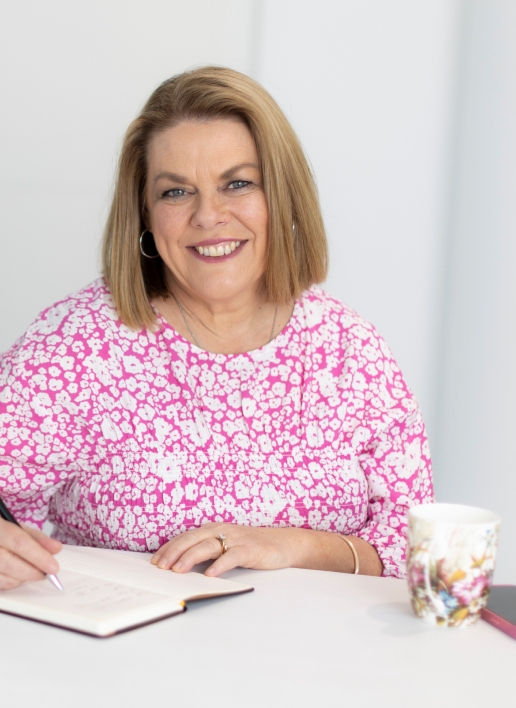
Jen Richardson’s path into financial education for women started at her parents’ kitchen table. Growing up in what she describes as a “quiet household”, one where there were no arguments about money, but no discussions about it either. Richardson watched her father manage every financial decision while her mother had virtually no involvement.
When her parents engaged a financial planner, the pattern continued. “My mum used to say to me, ‘He doesn’t talk to me. I don’t understand what he’s talking about. He only talks to your father. And he thinks I’m an idiot when I ask questions,'” Richardson recalls.
That experience planted a seed. But it was years before Richardson — a qualified accountant and former financial planner — recognised just how widespread the problem was.
From Personal Reckoning to Professional Mission
Despite her accounting qualifications, Richardson herself wasn’t immune to poor financial habits. She grew up in a household where money was never discussed, and by her twenties, she was living on credit and paying interest on credit cards — a pattern she now recognises as the direct consequence of never being taught how to manage money.
“I became an accountant at 18, but accountancy back then was very different. You only looked after business tax. Nobody taught me how to manage my own finances,” she says.
The turning point came at 30. Richardson returned from her honeymoon to find she and her husband had just ten dollars in their bank account. She taught herself the system she now teaches others — but carried what she calls a “scarcity mindset” for years afterwards.
The moment that changed everything came in a shopping centre with her eldest son. “He asked me for a milkshake, and I said, ‘No, I haven’t got enough money.’ And he pointed to an ATM and said, ‘You just go to that machine and get money out of it.’ I realised then that I was passing on really bad money habits.”
That night, Richardson sat down and designed a financial education program — not for clients, but for her own children.
The Results Speak for Themselves
Richardson’s three sons, now aged 23, 24, and 25, each have nearly $200,000 saved for house deposits — a remarkable achievement in a generation routinely told home ownership is out of reach.
The method was deceptively simple. When her sons started working, Richardson had them salary sacrifice just $20 a week into superannuation. With tax benefits, the real cost was closer to $12 per week. Her eldest put it in perspective at the time: “That’s two schooners. I can go without two schooners a week.”
That $20 weekly contribution, started in their late teens, is projected to generate an additional $367,000 in superannuation by retirement — a figure Richardson now uses to illustrate how small, early actions create transformative long-term wealth.
She also coached her eldest son to make spouse contributions to his partner’s superannuation when she took time off to have their first child — a strategy that addresses one of the most significant drivers of the gender super gap in Australia.
“Most women I work with have never had someone sit down and explain superannuation to them without jargon or condescension,” Richardson says. “That’s not a personal failing. That’s a systemic one.”
A Crisis Hiding in Plain Sight
Richardson’s work addresses a well-documented but still underserved problem. Australian women retire with significantly less superannuation than men, driven by the compounding effects of the gender pay gap, career breaks for child-rearing, and a system that pays superannuation as a percentage of wages — meaning any time out of the workforce directly reduces retirement savings.
“Women have a life expectancy of about five years more than men, but they’re retiring with less money,” Richardson says. “Women are more dependent on men in retirement than men are on women. And if you miss out on contributions in your twenties because you’re having kids and nothing extra goes in, you’ve got all your fees and charges coming out but nothing going in.”
The problem extends beyond retirement. Richardson has seen firsthand what happens when women are financially dependent on partners. A close friend, also an accountant, called Richardson after a colleague’s husband died suddenly. The widow didn’t know how to pay a bill. She didn’t know how to use internet banking. Richardson’s friend and her husband had to sit down and teach her the basics.
“That story isn’t unusual,” Richardson says. “When I mentioned it to clients in my tax practice, they all said the same thing: ‘Yeah, but you’re lucky because you know how to do it.’ There’s no luck involved. It’s just education.”
Why Financial Planning for Women Requires a Different Approach
Richardson deliberately moved away from focusing solely on women navigating divorce after finding that clients in that situation often arrived wanting to vent rather than rebuild. “I don’t want people who are there just to gripe about their situation,” she says. “I want people who are there to make a change.”
Instead, her program now serves women across all life stages — from women in their twenties planning for maternity leave and navigating the financial impact of stepping out of the workforce, through to women approaching retirement who have never been taught how superannuation works.
The shift reflects a broader trend Richardson has observed: financial anxiety doesn’t discriminate by age. She has had women well outside her original target demographic of those in their forties reach out through her podcast saying they still needed help.
“I had originally gone with women 35 to 55, but then I realised a 35-year-old woman is in a completely different place to a 55-year-old woman,” she says. “Now I just help women. Because a woman in her twenties who’s about to have a baby needs this education just as much as a woman approaching retirement.”
What My Money Makeover Delivers
The program is a seven-module course structured across three phases — Awareness, System, and Wealth. It includes modules on mindset and money beliefs, establishing a financial baseline, goal setting, Richardson’s signature “Calm Money System,” future planning, women and superannuation, and investing for wealth. There are also approximately eight bonus modules, including one specifically on teaching children about money — drawn directly from the system Richardson used with her own sons.
The course operates within a 12-week container that includes weekly live Zoom calls and a private community. Richardson intentionally closes access after the 12-week period to encourage completion, with participants then able to transition into a low-cost ongoing membership for continued support.
“One of the things that annoy me most about leaving courses open-ended is nobody does it,” she says. “They think, ‘I’ll do it next week when I’m not so busy.’ I want to create enough structure to get people through it without forcing them.”
Early participants have already delivered measurable results. One member reduced her family’s weekly grocery bill from $500 to under $320 and saved close to $2,500 within ten weeks.
Building a Scalable Platform for Long-Term Impact
At 58, Richardson is designing My Money Makeover as a digital platform that will allow her to work from anywhere in the world. She is also pursuing opportunities in corporate financial education for women, speaking engagements, and podcast guest appearances — building on a natural communication style honed through years of client-facing work and her own podcast, which she recently relaunched in a new question-and-answer format alongside a colleague in her twenties to offer multiple generational perspectives on money.
“I don’t want to ever retire, retire,” Richardson says. “Put me on a stage, put me on a podcast, put me in an interview — I love that. I just want to be able to do it from anywhere.”
About Jen Richardson
Jen Richardson is an accountant, former financial planner, business coach, and the founder of Jenrichardson.co. She has coached hundreds of women to financial independence and is recognised as a leading voice in financial planning for women in Australia. Her areas of expertise include women and superannuation, financial recovery after divorce, retirement planning, postpartum financial planning, and practical financial literacy education for women at every stage of life.
You can check out Jen’s program and more information about how she’s helping women on her website jenrichardson.co
Media Contact
Company Name: Jenrichardson.co
Contact Person: Jen Richardson
Email: Send Email
Address:Suite 24 Level 1, 10 Bradford Close, Kotara
City: Newcastle
State: NSW 2289
Country: Australia
Website: https://jenrichardson.co/my-money-makeover/


