
Long-Term Effects of Sandblasting: Risks and Mitigation – Northern California Sandblasting Company Addresses Industry Concerns
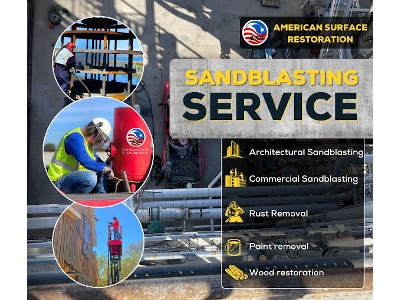
Grass Valley, CA – As industrial surface preparation continues to grow across Northern California, ASR California brings attention to serious health and environmental concerns that demand immediate industry attention. The Long-Term Effects of Sandblasting: Risks and Mitigation require comprehensive understanding and proactive measures to protect workers and surrounding communities.
Recent data shows that surface restoration professionals face significant occupational hazards when proper safety protocols aren’t implemented. ASR California, serving Auburn, Grass Valley, Roseville, Sacramento, Modesto, and the Bay Area, emphasizes that awareness and prevention remain the most effective tools against these preventable conditions.
Silica Dust Exposure Creates Serious Respiratory Threats
Crystalline silica particles become airborne during abrasive blasting operations, creating invisible hazards that can penetrate deep into lung tissue. Workers who inhale these microscopic particles over extended periods risk developing silicosis, an incurable lung disease that causes permanent scarring and inflammation.
Medical professionals report that silicosis symptoms may not appear for years after initial exposure, making early prevention critical. The condition progresses through three stages: chronic, accelerated, and acute, with each presenting increasingly severe breathing difficulties.
Beyond silicosis, prolonged silica exposure contributes to chronic obstructive pulmonary disease (COPD) and significantly increases lung cancer risk. These conditions affect not only immediate workers but also nearby personnel and communities where mobile sandblasting operations occur without adequate containment measures.
Skin and Hearing Damage Often Goes Unrecognized
Abrasive particles traveling at high velocity don’t just threaten respiratory health. Direct contact with silica streams causes abrasive dermatitis, characterized by painful irritation, cracking, and blistering. The mechanical action strips away protective skin layers while the drying properties of silica leave skin vulnerable to infection and chronic conditions like eczema.
Noise pollution from blasting equipment regularly exceeds 100 decibels, comparable to standing near a chainsaw or jackhammer. This sustained exposure causes irreversible hearing damage, yet many operations fail to provide adequate ear protection or monitor sound levels consistently.
Workers experiencing these conditions often don’t connect symptoms to workplace exposure until damage becomes severe. Surface restoration professionals need comprehensive protective equipment and regular health screenings to catch early warning signs.
Environmental Contamination Extends Beyond Job Sites
Fine particulate matter released during surface restoration doesn’t simply settle harmlessly. These particles travel significant distances on wind currents, degrading air quality in residential neighborhoods and natural areas. Communities near active job sites report increased respiratory complaints and reduced visibility during operations.
Soil and water contamination presents another serious concern. Many surfaces treated through abrasive methods contain lead paint, industrial residues, or other toxic materials. When blasting removes these coatings, contaminated particles infiltrate surrounding soil and can leach into groundwater systems, affecting plant growth and aquatic ecosystems.
Wildlife populations experience behavioral changes and displacement due to sustained noise pollution from blasting equipment. Birds abandon nesting sites, while ground-dwelling animals alter movement patterns to avoid affected areas. These disruptions cascade through local food chains and habitat stability.
Modern Mobile Sandblasting Technology Reduces Risks
Recent advancements in mobile sandblasting equipment allow for more controlled operations with significantly reduced environmental impact. Vacuum recovery systems capture spent abrasive material and removed coatings before they become airborne, containing up to 95% of particles that traditional methods release.
Dustless blasting technology represents another significant improvement. This process combines water with abrasive media, suppressing dust generation while achieving comparable surface preparation results. The water acts as a dampening agent, preventing fine particles from becoming airborne and reducing cleanup requirements.
Mobile sandblasting units equipped with these modern systems provide surface restoration services while minimizing exposure risks to operators and surrounding areas. The contained approach protects both worker health and environmental quality without sacrificing project efficiency.
Comprehensive Safety Protocols Protect Workers and Communities
Professional operations implement multiple layers of protection to address these hazards. Respiratory protection systems with supplied air rather than filtered air provide the highest level of lung protection. Full-body protective clothing prevents skin contact with abrasive materials, while dual-layer hearing protection addresses noise hazards.
Proper ventilation systems in enclosed workspaces prevent particle accumulation and maintain breathable air quality. Regular air quality monitoring confirms that engineering controls function effectively and alerts teams to equipment failures before exposure occurs.
Training programs educate crews about hazard recognition, proper equipment use, and emergency response procedures. Workers learn to identify early symptoms of exposure-related conditions and understand when to seek medical evaluation. This education extends to recognizing environmental risks and implementing containment strategies for different job site conditions.
Industry Standards and Regulatory Compliance
OSHA maintains strict exposure limits for crystalline silica, requiring employers to implement engineering controls, provide protective equipment, and conduct regular medical surveillance for exposed workers. California regulations often exceed federal standards, reflecting the state’s commitment to worker and environmental protection.
Surface restoration companies operating throughout Northern California must navigate these regulatory requirements while maintaining project timelines and quality standards. Compliance isn’t just a legal obligation—it represents a commitment to workforce wellbeing and community responsibility.
ASR California operates under these stringent standards across all service areas, from concrete grinding and shot blasting to industrial coatings application. The company’s approach prioritizes safety alongside technical expertise, ensuring that surface preparation projects protect everyone involved.
Professional sandblasting operations demonstrate that achieving superior surface restoration results doesn’t require compromising health or environmental quality. Modern equipment, comprehensive training, and rigorous safety protocols allow the industry to deliver needed services while addressing legitimate concerns about occupational and community exposure.
Media Contact
Company Name: American Surface Restoration
Contact Person: Buck
Email: Send Email
Phone: 530-588-7000
City: Fallen Leaf
Country: United States
Website: http://asrcalifornia.com/


