
Acoustic Neuroma Market Outlook 2025-2034: Increasing Incidence and Novel Treatments to Shape Future Growth, analyses DelveInsight
Acoustic neuroma, also known as vestibular schwannoma, is a rare, benign tumor affecting the hearing and balance nerve. It typically causes unilateral hearing loss, tinnitus, dizziness, and sometimes facial numbness. Incidence ranges from 3–5 per 100,000 person-years, rising sharply in individuals over 70. Despite its impact on quality of life, no FDA-approved drug therapies currently exist, and treatment relies mainly on surgery, radiation, or observation.
Off-label drugs like bevacizumab, lapatinib, and everolimus have shown promise, particularly in patients with neurofibromatosis type 2 (NF2). However, the drug pipeline remains extremely limited, with AK-antiVEGF (Akouos) being the only notable therapy in active clinical development. This gene therapy aims to slow tumor growth and preserve hearing by targeting VEGF pathways.
Key market drivers include rising healthcare spending, better access to specialty care, evolving treatment preferences, and technological improvements in radiosurgery platforms. Challenges include the disease’s rarity, limited clinical trial opportunities, lack of approved medications, high treatment risks, and reimbursement constraints.
(Albany, USA) DelveInsight’s publication, “Acoustic Neuroma Market Insights, Epidemiology, and Market Forecast–2034,” delivers an in-depth evaluation of Acoustic Neuroma, covering both historical and future epidemiological data along with market trends across the United States, EU5 countries (Germany, Spain, Italy, France, and the UK), and Japan.
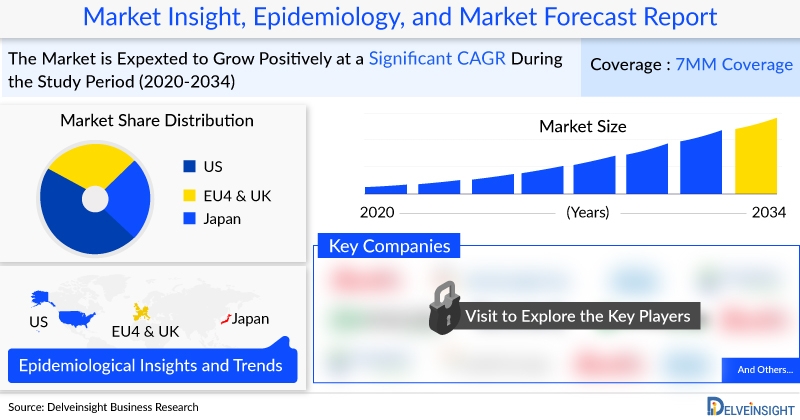
The report explores present treatment patterns, investigational therapies, individual therapy market shares, and the Acoustic Neuroma market value from 2020 through 2034 across the seven major markets. It also discusses established treatment pathways, major market growth drivers and challenges, and unmet clinical needs highlighting key opportunities and assessing the market’s future scope.
Request a complimentary sample report @ Acoustic Neuroma Market Forecast
Key Highlights from the Acoustic Neuroma Market Report:
- DelveInsight projects that the Acoustic Neuroma market will expand at a notable CAGR through 2034.
- Prominent companies engaged in this space include Akouos, Amgen, Roche, Natus Medical Incorporated, Elekta, Pfizer Inc., Roche AG, CIVCO Medical Solutions, Novartis AG, MAICO Diagnostics GmbH, Siemens Healthcare GmbH, Interacoustics A/S, Natus Medical Incorporated, and others.
- Important pipeline therapies anticipated to enter the market include AK-antiVEGF, among others.
- In August 2025, Akouos, Inc. reported findings from a Phase 1/2 study evaluating AAVAnc80-antiVEGF gene therapy in patients with unilateral vestibular schwannoma.
- In April 2025, Reveal Pharmaceuticals Inc. shared outcomes from a multicenter, Phase 2, open-label, ascending-dose trial assessing the safety and effectiveness of RVP-001 and determining an optimal dose for detecting CNS lesions in adult patients.
- Our analysis indicates that vestibular schwannoma occurs at an overall rate of about 3–5 cases per 100,000 person-years, with incidence increasing with age and reaching nearly 21 per 100,000 person-years among individuals over 70.
- According to Greene J et al. (2024), schwannomas represent roughly 8% of all clinically detected intracranial tumors, while hereditary causes account for bilateral acoustic neuromas in fewer than 5% of cases.
Acoustic Neuroma Overview
Acoustic neuroma, or vestibular schwannoma, is an uncommon, usually benign tumor arising from Schwann cells that insulate the vestibulocochlear nerve (cranial nerve VIII), which governs hearing and balance. These tumors generally grow slowly and are found between the inner ear and the brain. Common symptoms include one-sided or uneven hearing loss, tinnitus, vertigo, and balance difficulties. As the tumor progresses, it may press on nearby cranial nerves such as the trigeminal nerve, causing facial tingling or numbness, and in advanced cases may impair brainstem function.
The condition affects approximately 3–5 individuals per 100,000 person-years, with higher rates in older populations, particularly those above 70. While most instances are sporadic, some are linked to neurofibromatosis type 2 (NF2), a genetic disorder associated with multiple nervous system tumors. MRI remains the primary diagnostic tool.
Treatment approaches currently involve observation, microsurgery, or stereotactic radiosurgery based on tumor characteristics and patient health. No therapies have yet received FDA approval specifically for acoustic neuroma, although off-label drugs such as bevacizumab have demonstrated potential in select cases, underscoring the need for targeted medical treatments.
Curious about the projected Acoustic Neuroma market share in the 7MM by 2034? @ Acoustic Neuroma Treatment Market
Acoustic Neuroma Market Outlook
From 2025 to 2034, the acoustic neuroma market is anticipated to show consistent growth, driven by better diagnostic tools, rising awareness, and advancements in treatment technologies such as stereotactic radiosurgery, refined microsurgical procedures, and targeted drug development.
An expanding elderly population and increased detection of NF2-related tumors are enlarging the patient base. Emerging drug candidates like Akouos’s AK-antiVEGF focus on slowing tumor progression and protecting hearing, though no FDA-approved drugs currently exist. Existing interventions—surgery, radiation, and monitoring carry risks, emphasizing the demand for safer, nerve-sparing solutions. Off-label therapies including bevacizumab, lapatinib, and everolimus have shown encouraging results, particularly in NF2 populations.
Although typically benign, acoustic neuroma can lead to serious symptoms such as hearing impairment, tinnitus, dizziness, and facial sensory changes. The relatively small pipeline signals a considerable unmet need, yet continued innovation points toward significant progress in disease management over the next decade.
Market expansion is supported by improvements in imaging technologies, heightened disease awareness, and enhanced treatment methods. Growth in NF2-associated tumor prevalence, along with demographic aging, is broadening the treatment population. Research into novel options like AK-antiVEGF reflects a strong push to address current therapeutic gaps.
However, challenges remain, including the absence of approved drug therapies, limited pipeline depth, and the potential complications of surgery and radiotherapy. The rarity of the disease complicates large-scale trials, slowing innovation. Additionally, because the tumor is benign and often monitored rather than aggressively treated, demand for new interventions may be moderated.
Acoustic Neuroma Epidemiology
This section outlines past and present patient population data and projected epidemiological trends across the seven major markets. It examines drivers behind observed and expected patterns using published studies and expert insights. The section also presents diagnosed patient estimates, trends, and modeling assumptions.
Segmentation includes:
- Total incident cases
- Diagnosed incident cases
- Age-specific incidence
- Gender-specific incidence
Key Points:
- Acoustic neuroma affects roughly 1 in 100,000 individuals worldwide.
- The condition is more common in women than men and is typically diagnosed between ages 30 and 60, though pediatric cases can occur.
Want to explore how new diagnostic tools may increase diagnosed prevalence? Download the report @ Acoustic Neuroma Prevalence
Acoustic Neuroma Drug Uptake
AK-antiVEGF (Akouos) is an investigational gene therapy being developed for vestibular schwannoma, also known as acoustic neuroma a typically benign, slow-growing tumor that forms from Schwann cells around the nerve responsible for hearing and balance. The condition can lead to symptoms such as one-sided hearing loss, balance disturbances, and in advanced cases, broader neurological complications.
The therapy targets vascular endothelial growth factor (VEGF), a protein that supports blood vessel formation and contributes to tumor progression. By blocking VEGF activity, anti-VEGF treatment may help slow tumor growth and potentially protect hearing. AK-antiVEGF uses an adeno-associated virus (AAV) vector to deliver genetic instructions directly to inner ear cells, enabling localized production of an anti-VEGF protein while minimizing systemic exposure.
A Phase I/II clinical trial has been launched to evaluate AK-antiVEGF in patients with unilateral vestibular schwannoma.
Find out which three therapies could dominate market share by 2034 @ Acoustic Neuroma Medication and Drugs
Acoustic Neuroma Therapeutic Landscape Assessment
Leading organizations such as Akouos, Amgen, Roche, Natus Medical Incorporated, Elekta, Pfizer Inc., Novartis AG, Siemens Healthcare GmbH, and others are actively advancing innovative therapies expected to shape the future treatment landscape.
Discover how upcoming launches could influence market CAGR @ Acoustic Neuroma Clinical Trials and FDA Approvals
Key Report Insights
- Patient population analysis
- Market size and trend evaluation
- Competitive landscape overview
- Market drivers and restraints
- Growth opportunities
- Treatment strategies
- Pipeline assessment
- Current treatment algorithms
- Impact of emerging innovations
About DelveInsight
DelveInsight is a prominent life sciences market research and consulting firm known for syndicated reports and tailored healthcare industry solutions.
Media Contact
Company Name: DelveInsight Business Research LLP
Contact Person: Ankit Nigam
Email: Send Email
Phone: +14699457679
Address:304 S. Jones Blvd #2432
City: Albany
State: New York
Country: United States
Website: https://www.delveinsight.com/consulting


