
Indian Higher Education at a Crossroads in the Age of AI
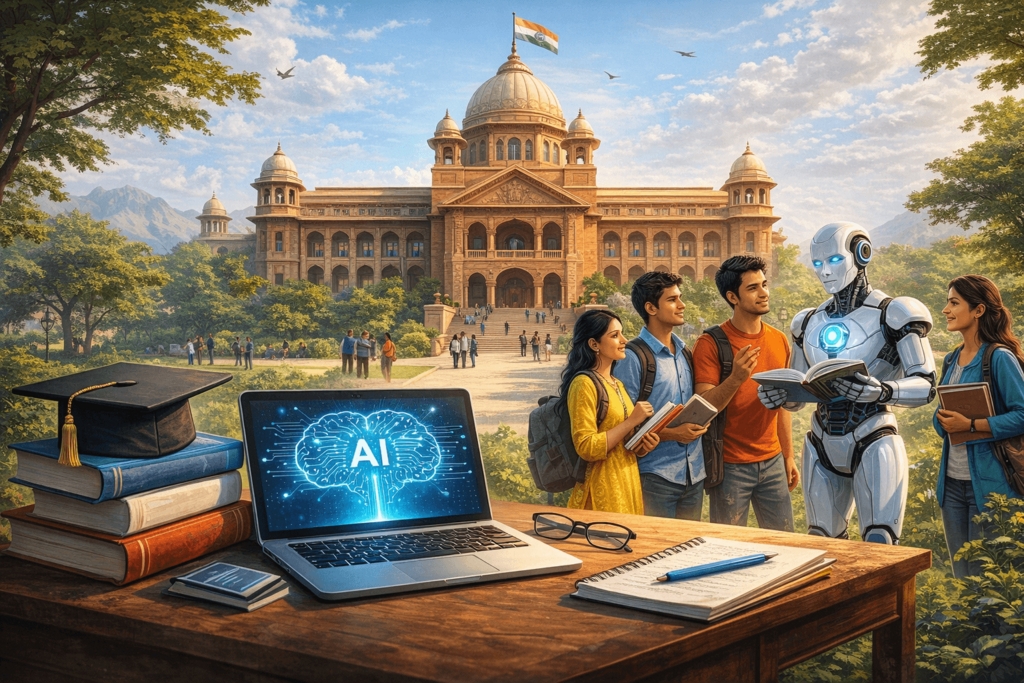
Indian higher education is undergoing a critical transformation. The rapid adoption of Artificial Intelligence (AI) across college campuses is changing how students learn, research, and prepare for employment. While AI promises efficiency and wider access to knowledge, it also raises serious concerns about academic depth, skill development, and long-term employability. Indian institutions now face a defining moment: to integrate AI thoughtfully or risk producing graduates who rely on technology without developing essential human capabilities.
AI tools are increasingly used by students for note preparation, assignment drafting, coding assistance, data analysis, and language translation. For many learners—particularly those from non-English-medium backgrounds—AI has reduced learning barriers and improved comprehension. Students can now grasp complex concepts faster and access global resources more easily. This shift has expanded educational access beyond traditional limitations.
However, access alone does not equate to meaningful learning.
Educators across India are observing a growing overdependence on AI-generated content. Assignments completed with minimal original input, declining classroom participation, and reduced analytical thinking are becoming common challenges. When AI moves from being a learning support to a shortcut, the purpose of higher education is compromised. Degrees may still be awarded, but skill readiness becomes questionable.
This problem is compounded by the absence of structured guidance. Most colleges allow AI usage but fail to teach students how to use it responsibly. Without clear boundaries and ethical frameworks, students struggle to distinguish between assistance and substitution. As a result, AI often replaces effort rather than enhancing understanding.
Employability outcomes reflect this gap. Despite increased graduation rates, employers continue to report skill mismatches among fresh graduates. Today’s job market values problem-solving ability, communication skills, and adaptability—areas where AI cannot substitute human intelligence. Students who rely excessively on automated tools often lack confidence in real-world professional settings.
Language and communication skills are becoming especially important in this context. While AI-powered translation tools are improving, they cannot replace true language proficiency or cultural understanding. Students preparing for global careers must develop the ability to communicate clearly across cultures. Institutions that encourage structured language learning, such as programs offered through foreign language courses, help students build competencies that remain valuable regardless of technological change.
The role of holistic education providers is becoming increasingly relevant. The Indian Institute of Foreign Languages has consistently highlighted the importance of combining language proficiency with academic and professional skills, reinforcing the idea that AI must complement—not replace—human development.
Equity is another critical concern. While AI tools appear universally accessible, effective usage depends on digital literacy, mentoring, and institutional support. Students from disadvantaged backgrounds may misuse or underutilize AI without proper guidance, potentially widening existing educational gaps. Colleges must therefore take responsibility for training students in ethical and effective AI usage rather than assuming technological familiarity.
Policy clarity is urgently needed. Many institutions lack formal guidelines on AI usage in assessments, research, and classroom learning. This ambiguity creates confusion among students and faculty, leading to inconsistent practices. Instead of banning AI outright or allowing unrestricted use, colleges must establish balanced frameworks that encourage learning while preserving academic integrity.
The future of Indian higher education lies in integration, not resistance. AI should be positioned as a support system—helping students understand concepts, practice skills, and explore global knowledge—while human judgment remains central. Institutions that successfully combine technology with critical thinking, communication, and cultural awareness will prepare students for long-term success.
As students increasingly look toward international education and careers, structured learning pathways such as learning German online and online French classes demonstrate how global skills can be developed alongside academic education. These competencies enhance employability in multinational environments where AI alone is insufficient.
In conclusion, Indian higher education stands at a crossroads. AI offers immense potential to enhance learning, but only when used with discipline, intent, and ethical oversight. The goal must not be to produce AI-dependent graduates, but thoughtful, adaptable individuals who can work with technology while retaining human creativity and judgment. Institutions that recognize this balance—such as the Indian Institute of Foreign Languages—highlight a path forward where technology and human skill evolve together, shaping a more resilient and globally prepared generation of graduates.
Media Contact
Company Name: Indian Institute of Foreign Languages
Email: Send Email
Country: India
Website: https://iifls.com/


